
Asset Allocation ETFs are like Pasta!

Portfolios & Pasta!

Many years ago we visited some Italian friends for dinner. That was the first time I realised that pasta wasn’t meant to have a couple of pounds of stew heaped on top of it. Pasta in our house was usually over-boiled spaghetti, buried under lots of meaty-tomatoey stuff. Sometimes, we tossed in a few tablespoons of curry powder. Or maybe some jalapeños. And left-over spuds were always a no-brainer addition. Look, I’m not saying I didn’t enjoy some of these concoctions. But I was totally taken aback by how much I truly enjoyed the far simpler pasta that we experienced at our friends’ house. Portfolios are a bit like pasta in that respect. Sometimes, we can get carried away by having too many ingredients to choose from. Simpler can be better.

BlackRock’s iShares XGRO (20% fixed income) & XBAL (40% fixed income) have been available as all-in-one portfolio solutions since 2007. The arrival of the all-equity ETFs boosted interest in these off-the-shelf portfolios. In 2019, Vanguard Canada launched VEQT, their all-equity ETF. In that same year, the iShares XEQT ETF & Horizons (now Global X Canada) HEQT were also launched. And in 2022 we got BMO’s ZEQT. These funds are globally diversified, with about 45% of the allocation going to the US, 30% to Canada, & the remainder going to International, which includes a small allocation to emerging markets. These ETFs hold 10,000, or more, different company stocks from around the globe. That is some kind of diversification! And according to Harry Markowitz, a Nobel Prize-winning economist, diversification is the only free lunch in investing. There are a bunch of academic papers that support this level of diversification. While there are minor squabbles about percentages, or how great the American market is, I think some of us could benefit from using the allocation model employed by these highly diversified ETFs. Of course, that won’t stop us trying to mess with a good recipe from time to time, eh?

My own portfolio has gone through changes over the years. I was a growth investor at one time. Later, a dividend growth investor. Over time, new ETFs made it easier to chase the next hot sector or geography, so I started adding some of those. It wasn’t long before my portfolio looked more like one of my mad Irish-Indian-Mexican, & only vaguely Italian, pasta dishes! I finally got around to doing pasta the Italian way. It took me a little longer to learn how to apply that same keep-it-simple philosophy to my portfolio. But both cooking & investing are a little easier now. I will, however, admit that I occasionally toss a little hot pepper, or a little hot stock, into the recipe too!

Regardless of your preferred investment philosophy, there’s probably an all-in-one solution out there for you now. Along with the 100% equity ETFs, if you want 20% bonds, there are the V/X/ZGRO ETFs. The V/X/ZBAL ETFs cover the 40% bond allocation model. And so on. If you want the fund managers to take care of selling shares for you for income, BMO now has the T Series ETFs, like ZGRO-T & ZBAL-T. These ETFs dispense monthly income at the rate of 6% annualised. Now this distribution is well supported by recent market performance, but you should consult a professional to see if that 6% spending rate is sustainable throughout a lengthy retirement. Global X launched some funds for the high income investor. In 2023, EQCL provided a covered call & leveraged ETF that pays out at about a 12% rate. This sounds like a dream ETF &, since it was launched, it has been. Along with the fantastically high distribution, the underlying share price has continued to grow. But a 12% withdrawal rate might not be a safe bet for anyone starting out with a long retirement horizon. To complement this, Global X also have a globally diversified ETF with only covered calls. And another with only some leverage. What’s your favourite flavour?

With any fund that deviates from just holding & compounding plain old company stocks, it’s worth comparing its total return performance against an equivalent regular version. Regardless of huge differences in yield, total return comparisons offer a very useful perspective on relative performance. This is important to review during different parts of the market cycle. Many of these new funds look good, but they’ve only been active during a period of generally great market growth. Or with some smaller shocks that recovered quickly. Comparisons of these newer funds over recent shorter timelines are not as useful. Be wary of overly optimistic expectations until there’s some history of performance during longer or more severe downturns. Maybe these funds will do well. But getting it wrong with overly optimistic expectations can wreak havoc with retirement planning.

So what’s the message here? Having a big, sloppy, messy set of investments can add work & stress to the job of managing a portfolio. It’s worth comparing such a portfolio to the far simpler portfolios like those asset allocation ETFs we talked about above. If you are confidently outperforming an equivalent all-in-one or asset allocation fund, & if you don’t mind the work, then carry on doing what you’re doing. But if the off-the-shelf ETF is beating your portfolio over the long haul, you might want to ask why. Could the simple recipe be worth considering?

Of course you absolutely should consult a professional before you start moving investments around. There are so many things that can go wrong. You don’t want to get hit with a big tax bill from selling off investments in a taxable account, for example. Nor from shifting things between tax sheltered or tax deferred accounts incorrectly. That’s a huge no-no. Professional assistance may be required to avoid these, & other, potential pitfalls. And finally, if a big, sloppy, messy portfolio is underperforming by a significant amount, it may even be worth paying a professional to manage things. DIY investing isn’t something we’ve sworn an oath of allegiance to! At the very least, it may be worth interviewing a few financial planners & advisors, to get a feel for what they might do differently for you. Even if you decide to continue with the DIY approach, these encounters can be very educational. They may even help you create a better plan. You’ve already got a financial plan though, right?

Okay enough with all that for now, can you guess what’s for dinner tonight! 😜

If you want to learn more about saving & investing, please check out Double Double Your Money, available at your local Amazon store.

Important – this is not investing, tax or legal advice, it is for entertainment & conversation-provoking purposes only. Data may not be accurate. Check the current & historical data carefully at any company’s or provider’s website, particularly where a specific product, stock or fund is mentioned. Opinions are my own & I regularly get things wrong, so do your own due diligence & seek professional advice before investing your money.
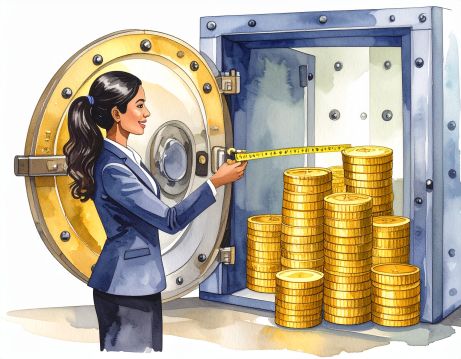
Benchmark Your DIY Portfolio

Measuring Portfolio Performance

How does your portfolio stack up against a simple, globally diversified, broad market index portfolio? Does it matter? It might. Most of us, short of placing some lucky bets, are unlikely to beat the markets over the course of our decades-long investing lifetime. But that doesn’t stop us trying. And that can get messy. Do you know what’s in your basket? And how well it’s working? If you find yourself wondering about this every now & then, it might be worth checking. How do we do that?

Plug your portfolio details into one of the online tools that provide portfolio comparison features. I like the Backtest Portfolio feature in Portfolio Visualizer for this. Once your portfolio is loaded, compare its total return performance to one of the all-equity ETFs like ZEQT, VEQT, or XEQT. If the equity side of your portfolio is crushing the returns of these all-equity funds, well done. Do you know why? Is it luck or skill? Can it continue? If you think it can, keep doing what you’re doing & get ready to enjoy your retirement!

If things are not going that well, it might be worth exploring why not. Of course, some investors may deliberately choose a portfolio mix that lags index funds. Not that the goal is to lag, but other attributes (low volatility, increased cash flow, whatever) may be favoured over maximising total return. It also doesn’t matter if you have a growth, dividend, or income investing approach, benchmarking total return performance can still be enlightening. And useful. Sticking with any strategy, even one that lags, is a decision best made when we know the cost.

I’ve left out a bond or cash component. However, that’s easily added. Make sure it’s in the same ratio as in your own portfolio, for an apples-to-apples comparison. Or use one of the asset allocation ETFs, like XGRO, VBAL, ZCON, etc. as your benchmark. These are the all-equity ETFs with bond funds built in. Select one with a built-in bond percentage that matches your own portfolio. I prefer not to use an S&P 500 Index® fund as the benchmark, because it’s less geographically diversified than I prefer for my portfolio. For for those who invest only in the US market, it’s a valid choice.

Most of the comparison & performance tools will require a subscription if you want to take advantage of the full capabilities. But, despite the limits, the free access can still be very useful. For example, Portfolio Visualizer allows 15 holdings & 10 years of back testing under the free tier. While stock pickers will almost certainly be challenged here, most ETF investors are likely to have fewer holdings. But if you’ve got more, choose all the bigger ones & hopefully the top 15 holdings will make up the bulk of your portfolio value.

Another challenge with making comparisons is that the first of the all-equity ETFs only launched in 2019. That limits how far back we can look for direct comparison. But there are some tricks that we can employ. Like breaking down a fund into older constituent (or similar) ETFs. For example, we can use an all-equity ETF proxy made up of VUN (USA 45%), XIC (Canada 25%), XEF (International Developed 25%), & XEC (Emerging 5%). This gets us a comparison all the way back to September 2013. On the flip side, if your portfolio has a bunch of new funds, there won’t be much history to look at. And, in general, the shorter the timeline, the lower the value of the comparison.

This next proxy drifts further away from using a single all-equity ETF. A comparison portfolio of SPY (USA 45%), XIU (Canada 25%), & EFA (International 30%) is a rough approximation that allows benchmarking all the way back to September 2001. It would have been interesting to see the impact of the dot-com implosion in 2000, but EFA wasn’t old enough to catch that event. I guess we could use a 50:50 portfolio of SPY & XIU to get back to 2000. The problem with both these “created” benchmarks is that the funds are in different currencies. This further muddies the waters. Pretty significantly. That said, for rough comparisons, they look back about 25 years. But why are we bothering with all this history stuff anyway?

We all know that past performance does not predict what the future holds. But benchmarking against one of these all-equity ETFs, or against a proxy for longer timeline comparisons, can throw up some interesting insights. It’s good to know how an asset mix survives things like the dot-com meltdown & the great financial crisis. There is tremendous value in seeing how things worked while accumulating. And then how things can change, sometimes seriously, while decumulating in retirement. I know some people are shocked by the outcomes from these comparisons. If that’s you, I hope you are positively shocked. Because of how well your portfolio has performed. And if so, congratulations!

If you are negatively shocked, you might want to reconsider what you are invested in & why. If the equity portion of your portfolio is way behind the returns of the globally diversified fund, is that acceptable to you? Is your original investing hypothesis intact? Ah look, I’m trying to tiptoe around asking you if you know what you’re at here! And if you don’t, consider this …

Should an investor seriously trailing an ETF filled with globally diversified, total market index funds think about the potential for buying that ETF instead? Or maybe this investor should consider talking to an advisor. I know that is a heretical thing to say out loud amongst DIY investors. But if the results are likely to be better, after paying an advisor 1% to just buy the all-equity ETF for you, why would you not think about this? And if this advisor throws in some fancy financial planning, that’s an added bonus. Look, DIY investing is not a religion. And we didn’t take a vow. We don’t have to remain committed to underperformance. Particularly if we can’t figure out how to fix it on our own. Of course, it can be as challenging to choose a good advisor, as it is to build a good portfolio! Seems like there is no escaping the need to invest in learning when it comes to making enlightened decisions about our money.

I guess this is all a bit simplistic, eh? But if you’ve been doing your own thing for a bit, it can be insightful to benchmark your performance against a simple off-the-shelf portfolio, like the all-equity ETF we used for benchmarking. And it’s an EFT that some academics & professionals argue might be the best long term investment choice for many DIY investors anyway. Only you can decide what to do once you see the results of a benchmarking exercise. Just don’t jump from the frying pan into the fire!

There are other considerations, of course. Some favour lower volatility portfolios. Others treat & handle risk differently. Retirement cashflow or income can be a big influence on portfolio choices for those nearing retirement. Worries about sequence risk in early retirement can factor into portfolio selection. And on & on it goes. But, regardless of these many influences, measuring & comparing performance can provide insight. And the insight may help guide us towards better solutions going forward. And if you do decide to have a discovery chat with an advisor, why not benchmark the advisor’s proposed portfolio against one of the all-equity ETFs as part of that process. After going through all this, I’m now questioning my own portfolio. Think I’ll head off & do a little benchmarking of my own. Catch up with you later! 😜

If you want to learn more about saving & investing, please check out Double Double Your Money, available at your local Amazon store.

Important – this is not investing, tax or legal advice, it is for entertainment & conversation-provoking purposes only. Data may not be accurate. Check the current & historical data carefully at any company’s or provider’s website, particularly where a specific product, stock or fund is mentioned. Opinions are my own & I regularly get things wrong, so do your own due diligence & seek professional advice before investing your money.